Swedru All Blacks FC
Ghana · GPL 2025/26

TTMIB
Worldwide Management
FK Radnički Niš
Serbia · SuperLiga
A controlled three-layer model for African talent development and European validation. Swedru All Blacks provides the Ghanaian origin. TTMIB governs selection, timing and value protection. Radnički Niš delivers the European proving ground. The result is not one player movement — it is a repeatable system.
This page is built for one decision: Swedru All Blacks and FK Radnički Niš can start a controlled player pathway now — operated by TTMIB, based on selected Ghanaian profiles, and structured either through a Radnički scout visit to Ghana or first test players moving from Swedru to Niš.


The cooperation must be easy for both clubs to understand: TTMIB identifies and filters the profiles, Swedru provides the source environment, Radnički validates the player under Serbian SuperLiga standards.
TTMIB and Swedru identify suitable players from training, match context and internal club knowledge. The first filter is position, body, mentality and development phase.
Video, basic data, scouting report, character read and family context are converted into a clear player dossier before Radnički receives the profile.
Either Radnički visits Ghana to assess players live, or one to two pre-selected players travel to Niš for a defined trial and integration window.
If the fit is proven, the pathway moves into transfer structure, development plan or a wider long-term cooperation between the clubs.
The first year should not be overloaded. The objective is one clean pilot: introduce both clubs, define needs, select profiles, complete one live assessment route, then decide whether to formalise the corridor.
TTMIB sends Radnički a first shortlist from Swedru. Radnički reviews profiles remotely and selects one or two cases for deeper assessment.
Radnički either hosts a trial in Niš or sends a representative to Ghana. TTMIB controls the schedule, player preparation and reporting.
If the first case works, both clubs can move toward a repeatable Ghana–Serbia pathway with agreed process, roles and commercial logic.
Three concrete ways to start. Each model can operate independently or as part of a long-term framework.
A Radnički Niš representative visits Ghana. TTMIB organises the complete programme: schedule, player presentations, match attendance, club visit. Swedru presents a pre-selected group of profiles. Low cost, direct observation, no travel risk for the player.
TTMIB selects and prepares one or two profiles. Players travel to Niš for a defined trial period — training integration, match observation, fitness testing. Full dossier provided in advance. TTMIB manages communication and logistics throughout.
A formalised cooperation framework between Radnički, Swedru and TTMIB. Continuous scouting access, regular player exchanges, shared development logic, agreed terms for transfers and revenue sharing. Built after the pilot phase proves the model.
After proven performance at Radnički — real match minutes, documented statistics, visible fitness and tactical adaptation — the next market step becomes credible and financially cleaner.
TTMIB has active corridors in Belgium, France, Germany, Luxembourg, the Balkans (Croatia, Slovenia, Slovakia), Scandinavia, Turkey, MLS and England. The destination is always development-phase dependent — no fixed target list. The right market is the one that fits the player at the right moment.
Swedru is the right origin club because it combines real access, top-flight pressure and development room — before market inflation starts.
| Official Name | Swedru All Blacks United FC |
| Nickname | Black Magicians |
| Location | Agona Swedru · Central Region · Ghana |
| League | Ghana Premier League 2025/26 |
| Home Ground | Swedru Sports Stadium · approx. 5,000 |
| Founded | Reference: 1945 |
| Pathway Role | Ghanaian origin node · talent source |
Swedru is not an academy brochure. It is a live football base — a historic Ghanaian club with returned top-flight status, a visible stadium and an environment that produces unfiltered profiles under real competitive pressure.
That combination is exactly what a pathway model needs at the source level: not a showcase club, not a protected environment — a place where players are assessed under genuine match stress before market inflation sets in.
GPL status changes everything. It means institutional visibility, real match pressure and the credibility to be taken seriously as a talent source.
A player assessed in the Ghana Premier League has been tested at the highest domestic level in one of West Africa's most competitive football nations. That context matters when presenting a profile to a European club.
GPL clubs operate under GFA regulations, with licensed referees, structured match schedules, recorded results and media coverage. It is not amateur football. It is the real thing.
The Swedru Sports Stadium proves that this is a real, active, league-usable football site — not a paper project.
| Venue | Swedru Sports Stadium |
| Capacity | Approx. 5,000 |
| Status | Active GPL match venue |
| Pre-season | Renovation work completed before 2025/26 |
| Read | Real club base · not theory |
Infrastructure is not a background note. It is one of the reasons Swedru can be taken seriously as an origin platform. A club with a real home ground, a local matchday environment and a visible football identity is a different proposition from a club that exists only on paper.
This is a pressure environment, not a comfort environment. That makes behavioural reading of players honest.
Swedru produces profiles in real competitive conditions. Players can be assessed under genuine match stress — duels, decision-making, physical load, recovery, discipline. Not in a sterile showcase but in a club fighting for points every week.
Selected player references visible in current reporting: Rudolf Mensah, Zayat Bubakari, Williams Dankwah, Samuel Fosu Boateng.
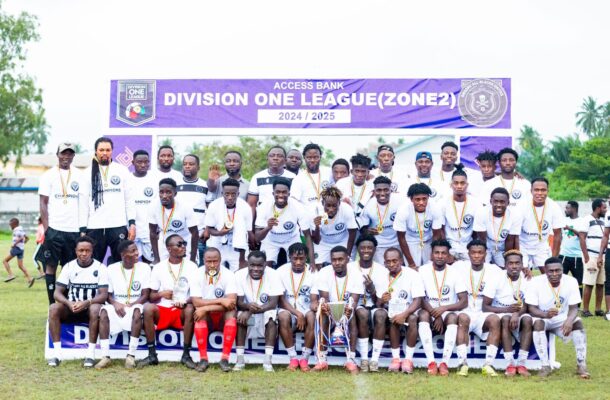
Promotion sealed 3–0 against New Edubiase United. 66 points at clinching stage. Back in the GPL after 16 years.
The promotion is not a decorative note. It is the strategic turning point. Without the return to the GPL, Swedru would mainly be a historic club. With the return, Swedru becomes a live top-flight platform — and that is what makes the cooperation model credible.
| Promotion clincher | 3:0 vs New Edubiase United |
| Points at clinching | 66 after 29 matches |
| Absence | 16 years from top-flight |
Visible decision-making figures stand behind the club's recent progress — which is what makes institutional dialogue realistic.
Club President
Key leadership figure behind the club's recent movement. Directly associated with the push to bring Swedru back into a viable top-flight environment. A visible decision-making figure attached to real club movement.
Coach · 2025/26 season entry
Publicly associated with Swedru as the coach entering the top-flight season. Coaching timeline should be reconfirmed before external circulation.
Serbia is not a downgrade. It is a strategic European adaptation corridor at exactly the right weight for a first step from West African top-flight football.
| Full Name | Fudbalski Klub Radnički Niš |
| Founded | 24 April 1923 |
| Nickname | Real sa Nišave · Real of the Nišava |
| League | Serbian SuperLiga · top flight |
| Stadium | Čair Stadium · 18,151 seats |
| Youth | II · U19 · U17 · Youth · U15 |
| European | UEFA Cup SF 1982 · Conference League 2022/23 |
Not Partizan. Not Red Star. Radnički sits exactly between the Belgrade giants and a provincial club — which is precisely the right position for a development step. A profile arriving from Ghana will get real minutes, real training intensity and real European match experience.
Radnički has a full youth structure, a documented European history, an 18,000-seat stadium and a professional setup. The right weight for the first European proving ground.
The Serbian SuperLiga is a recognised feeder league into Western European markets. Clubs in Belgium, France, Germany and Scandinavia already scout it regularly.
Professional coaching, genuine tactical demands, European tempo and contact intensity, a visible league structure with media coverage, and a documented corridor into Western European markets.
Radnički finished 2nd in the SuperLiga in 2018/19 with 84 points. They have competed in the UEFA Europa League qualifying rounds and the Conference League. This is not second-tier football in a dormant league.
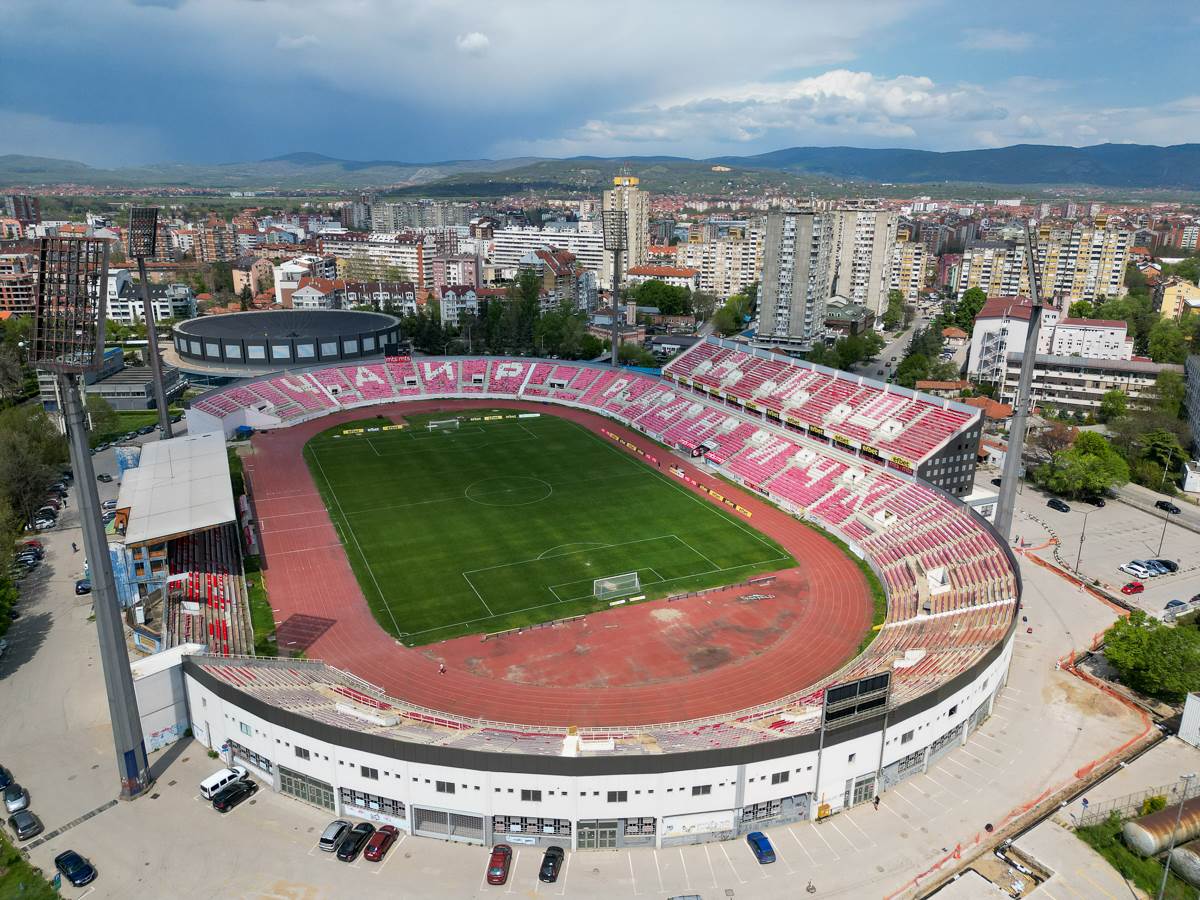
Čair Stadium · 18,151 seats · renovated 2011/12 at over €10 million. Fourth largest stadium in Serbia. Part of the Čair Sports Complex.
| Capacity | 18,151 seats |
| Surface | Hybrid grass |
| Built | 1963 · renovated 2011–12 |
| Cost | Over €10 million renovation |
| Serbia rank | 4th largest stadium in Serbia |
Professional territory. Comparable to home grounds of Belgian Pro League clubs and French Ligue 2 venues. Large enough to signal seriousness — contained enough that individual performance stays visible.
The 1981/82 UEFA Cup campaign is European football history. Radnički eliminated Napoli, Grasshopper Zürich, Feyenoord and Dundee United before falling to Hamburger SV in the semi-final.
A developing African player will get real minutes at Radnički. Not two years on the bench behind an established squad.
European training rhythms. Tactical discipline. Physical intensity. Contact demands. Decision pressure. Professional expectations. These are exactly the elements an African player needs to prove himself before a bigger market step.
Radnički has a full academy structure (U15 through II) and a track record of developing and selling players. The club also has a complete youth structure — meaning a player arrives into a professional environment, not an isolated trial context.
Niš is the third-largest city in Serbia. 260,000 inhabitants. University city. Economic centre of southern Serbia. International airport.
| Population | ~260,000 (administrative area) |
| City rank | 3rd largest in Serbia |
| University | ~30,000 students · 13 faculties · est. 1965 |
| Airport | Constantine the Great Airport · international |
| Economy | Electronics · engineering · textiles |
| Geography | Gateway between East and West · Balkan crossroads |
For an African player making a first European move, city quality matters. A functioning city with a university, international airport, economic activity and cultural life is an easier adaptation environment than an isolated small-town club.
Niš is not Belgrade — and for a development step, that is a feature. Less distraction, more football focus, more playing time. A real city around it.
Without TTMIB in the middle, the cooperation is exposed to the standard failure pattern: random contacts, wrong profiles, poor communication, bad timing, unclear responsibilities, unprotected values. With TTMIB, it becomes a controlled process.
| Founded | 2009 |
| Experience | 30+ years in international football |
| Africa focus | Nigeria · Ghana · Côte d'Ivoire · Senegal · Gambia |
| European reach | Germany · France · Belgium · Luxembourg · Serbia · Balkans · Scandinavia · Turkey · UK |
| Americas | MLS · Paraguay |
| Media | Saran Group partnership |