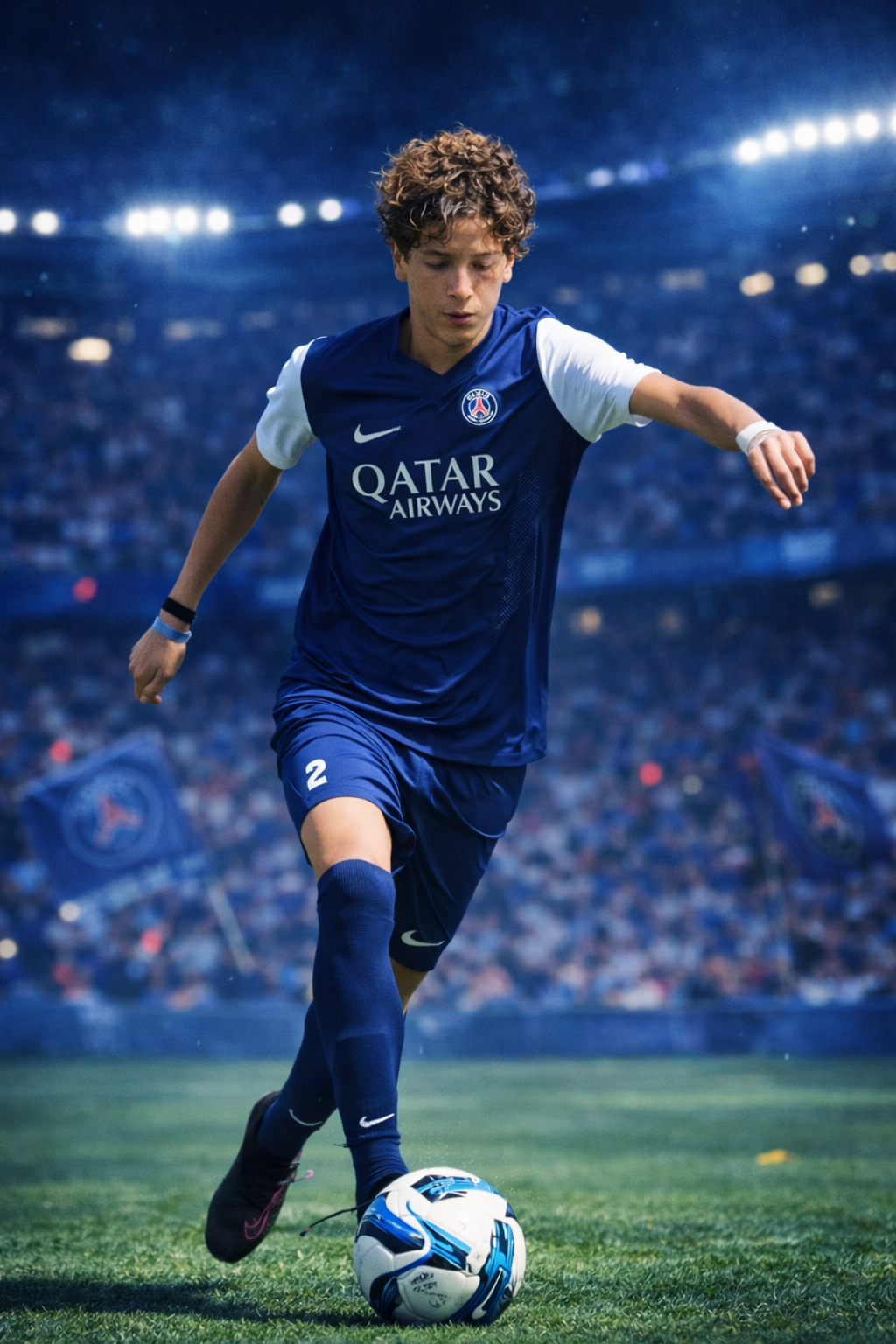
PSG Academy performance data shows a technically oriented attacking player with useful speed markers, improved endurance score and clear physical development areas: mobility, hamstring robustness and first-step explosiveness.
| Metric | Value | Scouting read |
|---|---|---|
| 5m | 1.225 sec | usable first-step foundation |
| 10m | 2.040 sec | solid acceleration mechanics |
| 20m | 3.295 sec | progressive sprint profile |
| 30m | 4.461 sec | good open-field speed capacity |
| F0 / V0 / Pmax | 8.53 · 8.85 · 1250W | useful force-velocity foundation |
| Area | PSG read |
|---|---|
| Mobility | key marker for movement efficiency |
| Hamstrings | routine improved; maintain as fixed work |
| Consistency | main consistency benchmark |
Aissa Remadnia profiles as a technical attacking midfielder with a linking function between midfield and final-third zones. His best actions are based on pre-orientation, clean first touch, ball security under pressure and short-to-medium combination play. The profile is not built around pure 1v1 dominance; the value is in tempo retention, connection play and positional availability between lines.
The PSG data supports a balanced assessment: technical foundation, encouraging athletic indicators and clear long-term upside while the player remains in a senior-transition phase.
Best projected as an attacking midfielder with connector qualities, suited to possession-based structures where he can receive between the lines, link attacks and support progression through short combinations. In a 4-2-3-1 he profiles as a central attacking midfielder; in a 4-3-3 he can project as an advanced #8 or inside wide connector, depending on physical development and final-third impact.
| System | Fit |
|---|---|
| 4-2-3-1 | central #10 / linking midfielder |
| 4-3-3 | advanced #8 / inside-wide connector |
| 3-4-2-1 | half-space connector |
| 4-4-2 flat | less natural unless used as wide playmaker |
Development priorities are limited to the areas with direct relevance for training planning, recruitment assessment and senior transition.
The next step should be a structured environment with clear training standards, meaningful minutes and continued physical programming. The player needs rhythm, routine stability and competitive exposure.
If mobility, robustness and consistency continue to improve, the technical base can transfer into senior football. The key marker is repeatability under contact, tempo and fatigue.
Professional upside is linked to final-third productivity: goals, assists, progressive actions and actions after the pass. With stronger output, the profile moves beyond connector value.
| Scouting Recommendation | Recommended for continued live observation. Current assessment: technically refined, tactically adaptable and physically progressing; consistency and final-third productivity remain the decisive markers. |
|---|
Player enquiries, trial requests and recruitment discussions should be directed to TTMIB.